Trusted for 31 Years • Professional Hypnosis • Serving Clients Nationwide
Homepage > Hypnosis For Panic Attacks
If panic attacks have started showing up without warning, you are not broken and you are not losing your mind. Your body has simply learned to sound an alarm when there is no real danger. Hypnosis works with the part of your mind that sets off that alarm, so you can feel steady, safe, and in control again.
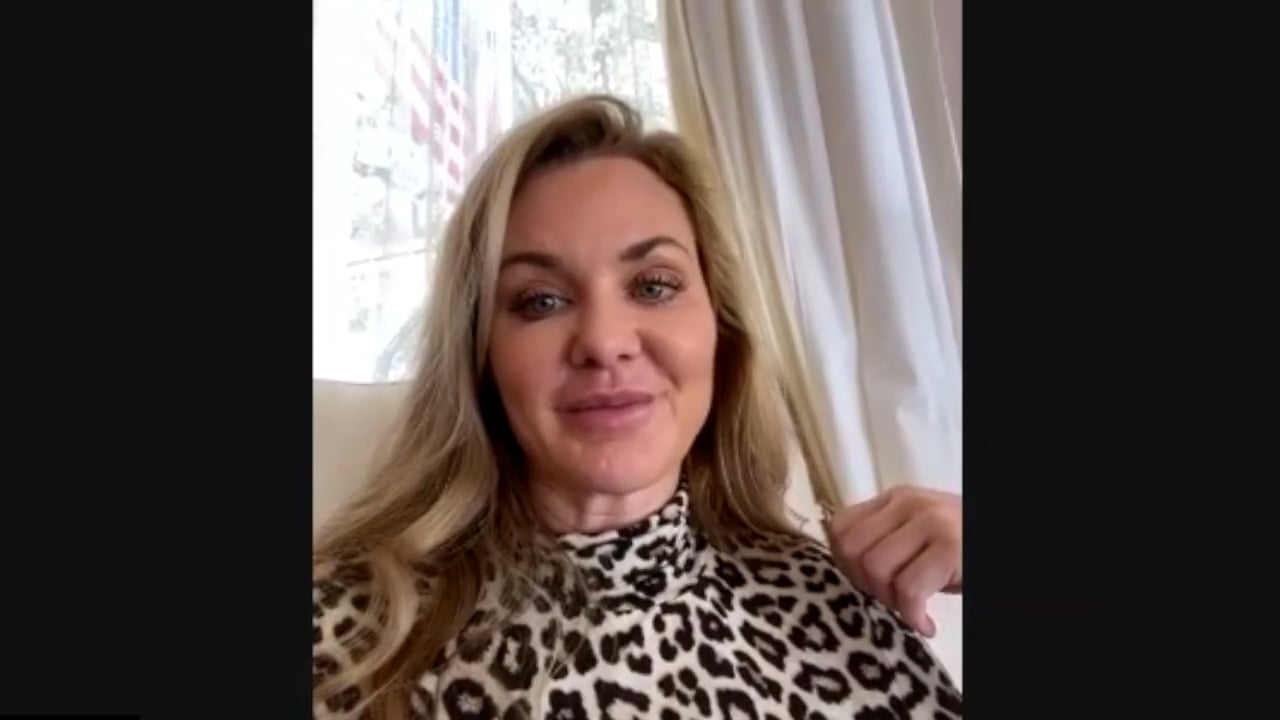
“I had terrible anxiety and PTSD from two tours of duty, and Tim’s approach saved my life and my marriage. Don’t think. Just do it.” — Josh
For more than 30 years, we’ve helped thousands of clients overcome anxiety, stress, and long-standing emotional patterns that held them back, even when nothing else seemed to work. The One Belief Away Method has been shaped by decades of experience, real-world breakthroughs, and results that continue long after the sessions end.
While every person’s journey is unique and individual results may vary, the consistency of the transformations is what clients and experts continue to speak about.
A panic attack arrives fast. One moment you are fine. The next, your body is behaving as though your life is in danger.
Most people describe some combination of these:
Many people who come to us have already been to the emergency room. They were told their heart is fine, their bloodwork is fine, and that what they experienced was a panic attack. That answer can feel confusing. If nothing is medically wrong, why did it feel so real?
It felt real because it was real. The sensations were not imagined. Your nervous system genuinely fired a full survival response. The only thing that was inaccurate was the timing, not the experience.
Please keep seeing your physician and continue any care you are receiving. Ruling out medical causes matters, and hypnosis is meant to work alongside your medical care, never in place of it.
Here is what makes panic so exhausting: after the first attack, a second fear quietly moves in. The fear of the next one.
Your subconscious mind has one primary job, which is to keep you safe. After an attack, it files that experience away as a life-threatening event and starts scanning for anything that resembles it. A crowded aisle. A warm room. A skipped meal. A slightly faster heartbeat after climbing the stairs.
So you begin to monitor yourself. You check your pulse. You notice your breathing. And the moment you notice a sensation, your mind asks, “Is it happening again?”
That question is enough. The alarm sounds. And the attack that follows convinces your subconscious it was right to be watching, which makes it watch even harder tomorrow.
That is the loop. It is not weakness, and it is not a character flaw. It is a protective pattern doing exactly what it was designed to do, just at the wrong moments.
This is also why logic alone rarely ends it. You can know with complete certainty that you are safe and still feel the wave rise, because the loop was not built with logic. It was built with emotion, and it has to be updated at that same level.
When that avoidance centres on being around other people, it often overlaps with social anxiety, and the same underlying approach applies.
When panic first strikes behind the wheel, the road itself often becomes the trigger. Our page on hypnosis for driving anxiety covers that specifically.
For some people the panic attaches itself to fears about illness. If that sounds familiar, our page on hypnosis for health anxiety may fit better.
Struggling with anxiety more broadly? Read our complete guide to hypnosis for anxiety and stress.
Hypnosis is not sleep, and it is not a loss of control. It is a calm, focused state of relaxed attention in which the subconscious mind becomes far more open to updating old patterns. You stay awake, aware, and able to talk the entire time.
Working at that level, our One Belief Away™ (OBA) Method focuses on a few things at once:
Think of it like a smoke alarm that has become too sensitive. Nothing is wrong with the alarm itself. It simply needs recalibrating so it responds to actual fire instead of steam from the shower.
We want to be straightforward with you about results. Hypnosis is not magic and no ethical practitioner can promise a specific outcome. Every person’s history is different, and individual results vary. What we can tell you is that many clients notice meaningful shifts early, often within the first few sessions, and that panic responds well to this kind of work because it is, at its root, a learned response. What was learned can be relearned.
If you would like to understand the process in more depth first, you can read what hypnosis actually is or see how a session works.
It starts with a conversation, not a commitment.
Your free consultation is a short, private call. You describe what has been happening, when the attacks started, and what they have cost you. We listen, answer your questions honestly, and tell you whether we believe hypnosis is a good fit for your situation. If it is not, we will say so and point you somewhere better. There is no pressure and no sales pitch.
Sessions are virtual. We work with clients across the country by video and phone. You close your eyes and are guided through the session, so the experience is the same as sitting in an office, without the drive. For someone dealing with panic, being in your own home is often an advantage rather than a compromise.
Your plan is built around you. Panic that began after a single frightening event is approached differently than panic layered on top of years of chronic stress. You will not be handed a script.
The number of sessions varies. Some people need only a few. Others, particularly when panic is tangled up with trauma, longstanding anxiety, or health worries, benefit from a longer program. We will give you an honest estimate after we understand your situation, and you will always know where you stand.
You will never be asked to relive painful memories in detail or share more than you are comfortable sharing.
When you are frightened and looking for help, who you work with matters.
Tim Shurr, MA, has spent three decades helping people change patterns that would not budge any other way. Before developing the One Belief Away™ Method, he lived with Generalized Anxiety himself, so the tight chest and the racing mind are not theoretical to him.
You can learn more about Tim or watch and read real client success stories before you decide.
If your experience feels more like constant low-grade worry than sudden attacks, our hypnosis for anxiety and stress page may describe your situation more closely. Many clients deal with both.
1. Can hypnosis actually stop panic attacks?
Hypnosis can be very effective for panic because panic is a learned, conditioned response, and conditioned responses can be updated. By calming the survival response and changing the beliefs that trigger it, many clients experience fewer and milder attacks, and some stop having them altogether. No ethical hypnotist can guarantee a specific result, and individual outcomes vary, but this is an area where hypnosis has a strong track record.
2. Is a panic attack dangerous? Can it hurt me?
Panic attacks are intensely uncomfortable but are not considered physically dangerous by the medical community. They are a full activation of your body’s normal alarm system. That said, chest pain and shortness of breath should always be evaluated by a physician so medical causes can be ruled out. Once your doctor has cleared you, the work becomes about the alarm itself.
3. I went to the ER and they said nothing is wrong. Why did it feel so serious?
Because your body genuinely ran a survival response. Adrenaline surges, your heart speeds up, and your breathing changes. Those sensations are real, which is why the “nothing is wrong” answer can feel dismissive. Nothing was wrong with your heart. Something was misfiring in your alarm system, and that is what we work on.
4. How many sessions will I need?
It varies. Some clients see substantial change in a handful of sessions. Others, especially when panic sits on top of trauma or years of anxiety, do better with a longer program. We will give you an honest estimate during your consultation rather than a number designed to sound appealing.
5. How soon might I notice a difference?
Many clients report feeling calmer after the very first session, often describing a quieter mind and less bracing. Deeper change in the panic pattern usually builds over the following weeks as your nervous system settles into a new baseline.
6. Will I be unconscious or lose control during hypnosis?
No. You remain fully aware, you can speak, and you can open your eyes at any moment. Most people describe hypnosis as deeply relaxed and clear-headed. You cannot be made to do or say anything you do not agree to, and you will remember the session.
7. What if I’m afraid I’ll have a panic attack during the session?
That worry is common and completely understandable, especially if relaxing has sometimes triggered attacks for you. We go at your pace, you stay in control the whole time, and we can pause whenever you want. For many clients, learning that they can feel a sensation without spiraling is itself a turning point.
8. Does hypnosis work for panic disorder, not just occasional attacks?
Yes, we work with clients who have been diagnosed with panic disorder, including those who have developed avoidance around driving, flying, stores, or leaving home. The more entrenched the pattern, the more we focus on the underlying beliefs holding it in place. We are not diagnosing or treating a medical condition, and we coordinate with, rather than replace, your existing care.
9. I’ve tried therapy and medication. Why would this be different?
Most approaches work on the conscious level, teaching you to manage symptoms once they start. Hypnosis works at the level where the pattern was formed. Clients often come to us after other methods helped somewhat but did not change the underlying reaction. Hypnosis can also work well alongside therapy and medication.
10. Do I have to stop my medication to do this?
Absolutely not, and please never change or stop a prescription without talking to the prescribing physician. Hypnosis is complementary. Many clients work with us while continuing their medication, and any changes are a decision between them and their doctor.
11. Are sessions really done virtually? Does that work as well?
Yes. All of our sessions are virtual, and it works just as well. During hypnosis your eyes are closed and you are following guidance by voice, so the experience is essentially identical. Many of the video testimonials on our site come from clients who were never in the room.
12. Will I have to talk about traumatic events in detail?
No. You are never required to relive painful memories or describe anything you would rather keep private. The work focuses on how your mind responds today, not on excavating the past.
13. Is what I share confidential?
Yes. Your sessions and everything you share are kept private.
14. What causes panic attacks in the first place?
There is rarely a single cause. Common contributors include prolonged stress, an unresolved frightening experience, major life change, grief, burnout, health scares, and long-running anxiety that finally overflows. Sometimes the first attack seems to come out of nowhere, which usually means the pressure had been building quietly for a while.
15. Can hypnosis help with the fear of having another attack?
That is often the most important piece of the work. The anticipatory fear, the constant self-monitoring, and the avoidance it creates can be more limiting than the attacks themselves. Reducing that background dread frequently reduces the attacks as well.
16. What if hypnosis doesn’t work for me?
That is exactly what the free consultation is for. If we do not believe you are a good fit, we will tell you honestly and suggest a better direction. We would rather send you somewhere helpful than take on work we do not think will serve you.
17. Can children or teenagers be helped with panic?
We work with teenagers on a case-by-case basis. We no longer work with children under the age of ten, since virtual hypnosis is not effective at that age. Please mention the age during your consultation and we will let you know honestly whether we can help.
18. How much does it cost?
We offer several options, from self-guided programs to private one-on-one work. Pricing depends on which fits your situation. Schedule a free consultation and we will walk you through the options that make sense for you and your budget, with no high-pressure pitch.
Still have a question that isn’t here? We are happy to talk it through with you, with no obligation.
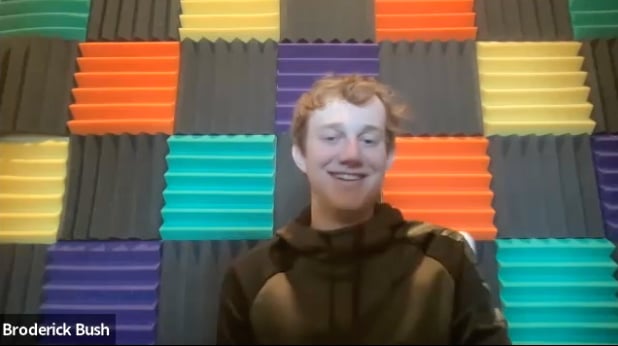
“Tim’s hypnosis program has given me an inner calm that I did not have. I have been dealing with panic attacks for more than 10 years on and off. Hypnosis is helping me to learn relaxation and change my negative and fearful thoughts, which is the only real cause for panic and anxiety.”
“Tim guides us step-by-step to a heightened awareness and offers specific actions we must take to overcome all the odds, invisible and real, to achieve authentic, lasting success. Tim Shurr is a change agent you can trust.”
Dr. Denis Waitley
Author, The Psychology of Winning
“Tim’s reputation speaks for itself. He has helped to change thousands of people’s lives around the world… I highly recommend him.”
Les Brown
Motivational Speaker & Author
“After over half a century of working in the field of personal growth, I’m totally convinced BELIEF is the stumbling block for the masses… This program can change your life forever.”
Bob Proctor
Author & Personal Development Pioneer
You do not have to keep organizing your life around avoiding the next attack. A short, private conversation is all it takes to find out whether hypnosis is the right next step for you.
No pressure. No obligation. Just a friendly conversation that produces more clarity and hope.
Prefer to talk now? Call (317) 502-5293 or email tim@timshurr.com.
Hypnosis is a complementary approach and is not a substitute for medical or psychological care. If you are experiencing a medical emergency, call 911. Individual results vary.